EXPeditions - The living library of knowlegde
The EXPeditions podcasts take you into the worlds of leading thinkers, scholars and scientists. Lively, accessible, reliable, these audio journeys guide you through key terrain in science and society, history, art and all the humanities.
Listen on:







Episodes

Friday Jun 20, 2025
Friday Jun 20, 2025
There's a famous saying by Francis Bacon that knowledge is power. As president of the Royal Society, Joseph Banks persuaded the British government to invest in science.
About Patricia Fara"I’m an Emeritus Fellow of Clare College, Cambridge.
I've got a degree in physics, but my real passion is the history of science, and I love writing books because I want to show everybody that the history of science is the history of absolutely everything."
Key Points
• As president of the Royal Society, Joseph Banks convinced the government that it was in their interests to invest in scientific research.• Banks’s suggestions for expanding the British Empire included seizing most of West Africa and using locals to dig up the gold.• Partly thanks to Banks, science and the State are now so closely allied that it’s often difficult to draw a line between the two spheres.
Joseph Banks is extremely famous in Australia, but he's not very well known in Great Britain. He didn't make any great scientific discoveries. On the other hand, he's extremely influential and a very important figure in the history of science.
He was president of the Royal Society for 42 years, which is a long time. And although he didn't write any great scientific papers and was very poor at mathematics (he was often criticised for his lack of mathematical ability), what he did do was bring together the government and scientific research.
There's a famous saying by Francis Bacon that knowledge is power. What Joseph Banks did while he was president of the Royal Society was to convince the government that it was in their interests to invest in scientific research.
research explained, academic insights, expert voices, university knowledge, public scholarship, critical thinking, world events explained, humanities decoded, social issues explored, science for citizens, open access education, informed debates, big ideas, how the world works, deep dives, scholarly storytelling, learn something new, global challenges, trusted knowledge, EXPeditions platform

Friday Jun 20, 2025
Friday Jun 20, 2025
There aren’t many women in the history of science. I think it's crucial to explore the past and examine how those prejudices and obstacles that women faced in the past are still affecting women today.
About Patricia Fara"I’m an Emeritus Fellow of Clare College, Cambridge.
I've got a degree in physics, but my real passion is the history of science, and I love writing books because I want to show everybody that the history of science is the history of absolutely everything."
Key Points
• Until the second half of the 19th century, women were barred from universities, restricting their opportunities to practise science.• As well as great discoveries, the history of science must take note of communication, translation and teaching, all of which involved influential women.• By understanding the origins of prejudices against women scientists, we can increase the number of women in science and improve their position and status.
Where are the women in science?
There aren’t many women in the history of science and I think it's important to understand why. After all, the past affects the present and the present affects the future.
And at the moment, there certainly aren't many women in the upper levels of science, even though we have equal gender legislation. So, for me as a historian, I think it's crucial to explore the past and examine how those prejudices and obstacles that women faced in the past are still affecting women today. The whole point of understanding how we've reached the present is to improve the future.
research explained, academic insights, expert voices, university knowledge, public scholarship, critical thinking, world events explained, humanities decoded, social issues explored, science for citizens, open access education, informed debates, big ideas, how the world works, deep dives, scholarly storytelling, learn something new, global challenges, trusted knowledge, EXPeditions platform

Thursday Jun 19, 2025
Thursday Jun 19, 2025
What has been learnt about the universe in the last 50 years will be one of the real high points, along with discoveries like the double helix and genetics, and Darwin and evolution.
About Martin Rees
"I'm the UK's Astronomer Royal and Emeritus Professor of Cosmology and Astrophysics at the University of Cambridge.
My research is mainly on trying to understand our universe around us. Aside from astronomy and space science, I’ve been very much engaged with science policy, particularly how modern technology can be controlled so that we can harness its benefits but avoid its downsides."
Key Points
• Science involves piecemeal efforts and the international collaboration of many people to understand what’s happening in a particular area of the natural world.• Scientists have a responsibility to realise when their work may have a dangerous downside and guard against its use.• Many decisions made by politicians today have a scientific element, so in order to have democratic debates, it’s important that all citizens have a feel for science and statistics.
Part of a historical debate
I’ve been a scientist specialising in a field that has developed very fast, so although I don’t feel I’ve made any great individual contributions, I’ve been part of a debate which has really deepened and broadened our understanding of the universe we live in. I think when the history of science is written, what has been learnt about the universe in the last 50 years will be one of the real high points, along with discoveries like the double helix and genetics, and Darwin and evolution.
I’ve been privileged to be part of this debate, which, of course, is an international debate, because science is an activity which straddles boundaries of nationality and faith more easily than other activities. I’ve been privileged to be part of this international community trying to understand the world and the universe. I’ve done this in a university, but I’ve had the privilege of working with younger colleagues and colleagues all over the world. In astronomy, like in particle physics, we sometimes depend on very expensive pieces of equipment which have to be shared internationally, so that makes our subject especially international. For me, that’s been a bonus.
research explained, academic insights, expert voices, university knowledge, public scholarship, critical thinking, world events explained, humanities decoded, social issues explored, science for citizens, open access education, informed debates, big ideas, how the world works, deep dives, scholarly storytelling, learn something new, global challenges, trusted knowledge, EXPeditions platform
Thursday Jun 19, 2025
Thursday Jun 19, 2025
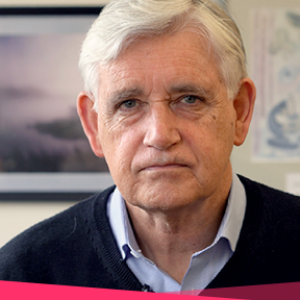
Bruce Stillman, Oliver R. Grace Professor and CEO of Cold Spring Harbor Laboratory, discusses the highs and lows of life as a scientist.
About Bruce Stillman
"I’m a biologist and biochemist, and President of Cold Spring Harbor Laboratory in New York.
I’m a scientist who works on the inheritance of genetic information, the inheritance of DNA and how the biochemistry of that process works, to understand how our genes are inherited from one generation to the next."
Key Points
• One of the great things about science is the constant influx of younger people who bring new ideas and challenge the status quo.• Like a good chef, a good scientist doesn’t stick to one “recipe” but is constantly experimenting with different methods and ideas.• Science needs people who have the tenacity to keep attacking a problem and the good sense to know when to change direction.
The thrill of experimentation
One of the fascinating things about science, and the reason I pursued a scientific rather than a medical career, is the scientific process. When I was an undergraduate, I worked in laboratories and was exposed to the daily life of a scientist. That is, you can go in, design experiments, get the results, look at those results and start to think about their implications. You’re the first person to see those results. This generates lots of ideas in your head, and you have to then come up with different ways of testing those ideas.
A critical component of being a great scientist is choosing which ideas to pursue, because you can go down the wrong path very easily if you’re not smart enough to figure out what the data is telling you and where to go with it.
research explained, academic insights, expert voices, university knowledge, public scholarship, critical thinking, world events explained, humanities decoded, social issues explored, science for citizens, open access education, informed debates, big ideas, how the world works, deep dives, scholarly storytelling, learn something new, global challenges, trusted knowledge, EXPeditions platform

Thursday Jun 19, 2025
Thursday Jun 19, 2025
Fiona Watt, director of the Centre for Stem Cells & Regenerative Medicine at King’s College London, talks about excellence in science.
About Fiona Watt
"I'am EMBO Director (European Molecular Biology Organization), a group leader at EMBL Heidelberg and Professor at King’s College London.
My passion is understanding the stem cells of the human body and how they can be used to improve human health."
Key Points
• The classic definition of excellence in science is making discoveries which will then be published in important journals, obtaining funding for your research, a prestigious professorship and receiving a number of honours and prizes.• Publishing your work is important because if you keep it to yourself, the field will not move forward.• An excellent scientist is one who cares about the results and who exhibits some humility in the way they describe their science.
The classic definition of excellence
Most people would agree that the classic definition of excellence in science is making discoveries, which will then be published in classic journals such as Science or Nature. This would lead to success in obtaining competitive funding for your research in the form of grants, career progression in the form of a prestigious professorship, acquiring a number of honours, election to the Royal Society or the National Academy of Sciences and picking up a number of medals or prizes along the way – a Nobel Prize would be the pinnacle of prize-winning, but there are others. In achieving recognition from your peers, you might be asked to chair an advisory group to advise the government on a particular topic. You might be on the advisory panel of a research centre or an institute in another part of the world. These would be the classic hallmarks of excellence, from my perspective.

Thursday Jun 19, 2025
Thursday Jun 19, 2025
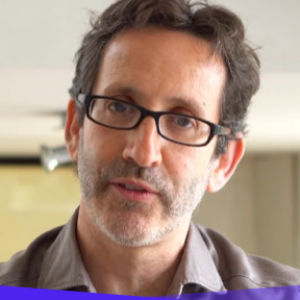
Geneviève Almouzni, Director of Research at CNRS and Head of a team at the Institut Curie, discusses why it is vital to share a passion for science.
About Geneviève Almouzni
"I am a Director of Research from The National Centre for Scientific Research (CNRS) at the Curie Institute, France where I lead the Chromatin Dynamics team. I am a laureate of the 2024 L’Oréal-UNESCO For Women in Science International Awards.
I’m particularly passionate about understanding how our genome is organised and how this is important during development — normal, and in the context of disease, such as cancer."
Key Points
• There are many women in science, but there are fewer women in roles with higher responsibility. Although the situation is improving, we need to pay attention to unconscious bias.• Mentorship and networking are key for scientists to learn from each other and make progress.• Conveying a passion for science is about sharing the excitement, pleasure, curiosity and potential you see.Women in scienceHow can one convey and transmit passion for science? I think it’s because you have it in the first place. It has to be natural, and it happens through sharing. It’s sharing the pleasure, sharing the excitement, sharing the potential that you can see and sharing your curiosity. It’s beautiful.
In terms of the role of women, there are many women in science, but it depends at which level. If you look in particular at life science, there’s a number of PhD students. But when it comes to higher levels of responsibility, the higher you go, the fewer women you find.
My hope is that it’s a matter of generations, because this is improving. We do see more young principal investigators, so young group leaders are becoming more engaged with more women at these levels. And I hope that will increase. But we live in a society with history, and we need to think about that. There are images that are still anchored in the minds of people that do not necessarily see women as being able to take on certain roles. And this is more in terms of unconscious bias.
research explained, academic insights, expert voices, university knowledge, public scholarship, critical thinking, world events explained, humanities decoded, social issues explored, science for citizens, open access education, informed debates, big ideas, how the world works, deep dives, scholarly storytelling, learn something new, global challenges, trusted knowledge, EXPeditions platform
Thursday Jun 19, 2025
Thursday Jun 19, 2025
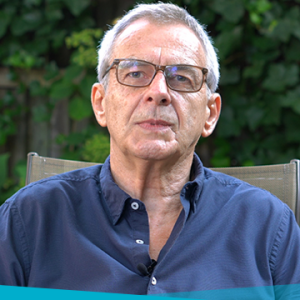
Buzz Baum, Cell Biologist at the MRC Laboratory of Molecular Biology in Cambridge, discusses what it really means to be a scientist.
About Buzz Baum
"I’m a Cell Biologist at the MRC Laboratory of Molecular Biology in Cambridge.
I am fascinated by the process by which one cell becomes two. I research how this process led to the origins of life on Earth, how it can go wrong to cause diseases like cancer, and how we might be able to solve them."
Key Points
• Science is about the creative process of discovery, about going out into a place where you know that the things you’ve learned may be wrong and taking that to the next step, in collaboration with others.• If you don’t get pleasure from seeing that one thing that disproves your hypothesis, or from rethinking your hypothesis, or from doing an experiment just to check your equipment works, then it’s very hard to be a scientist.• One of the strengths of science is collaboration: different voices each having their own ideas, each listening to one another. The more different voices you have, the better the science is.
A journey into the unknown
I like to think about science, and maybe the scientist, as a bit like one of these explorers who’s got a map of the world. It’s a flat map. They imagine a two-dimensional world and they’re going out exploring in the 1400s, 1500s, to map continents. And because it’s really a journey into the unknown, where you don’t know where you’re going, you have a map, but it’s not a very good one. You also have tools like telescopes, lenses, which can help you to explore, to see things that maybe the previous generation of explorers didn’t before our better ships, better microscopes, better telescopes.
So you go into new lands and try to map them out and get a better picture of the world that’s out there. I think one of the difficulties about explaining science is in understanding what it’s like to do science. When we learn science in school, we tend to mainly learn facts about the world – but we don’t have to memorise them and that can make it quite boring. I found it boring anyway. In art, you learn, you’re taught to like, to play and to create all these things. But if you want to discover new places, you really have to throw yourself into the unknown. You will have tools that can help you, but you don’t know what you’re going to see.
research explained, academic insights, expert voices, university knowledge, public scholarship, critical thinking, world events explained, humanities decoded, social issues explored, science for citizens, open access education, informed debates, big ideas, how the world works, deep dives, scholarly storytelling, learn something new, global challenges, trusted knowledge, EXPeditions platform
Tuesday Jun 17, 2025
Tuesday Jun 17, 2025
We need a radical transformation of environmental education in schools that can match the passion that children are increasingly feeling for the subject.
Key Points
• Sustainable development brought together the three pillars that we need to consider when thinking about our behaviour in relation to the environment: environmental protection and enhancement, social progress and economic development.• Young people today know about both sustainable development and children’s rights. When we bring them together, you can understand why they feel that they have the right to go on strike. Earth’s environmental crisis is a children’s rights issue.• We need a radical transformation of environmental education in schools that can match the passion that children are increasingly feeling for the subject. Children largely learn about distant environmental problems in the abstract while ignoring local ones.• Environmental education must bring children into a critical engagement with their local environment that results in improved understanding and care for the environment and helps the community move further towards engaged local democracy.
Tuesday Jun 17, 2025
Tuesday Jun 17, 2025
A teacher’s role is shifting away from providing educational content to orchestrating students’ learning and nurturing their confidence.
Key Points
Scientific insights are helping educators develop evidence-based improvements in teaching and learning.
A teacher’s role is shifting away from providing educational content to orchestrating students’ learning and nurturing their confidence.
The state has a role in providing resources and support to schools and universities, especially during periods of abrupt change, such as that caused by a pandemic.
Tuesday Jun 17, 2025
Tuesday Jun 17, 2025
With varying degrees of success, cutting-edge technologies have been introduced into schools throughout history.
Key Points
With varying degrees of success, cutting-edge technologies have been introduced into schools throughout history.
While online learning originally seemed disappointing, massive open online courses (MOOCs) are helping universities support students outside the classroom.
Human teachers are unlikely to be replaced any time soon. Instead, new pedagogies are aimed at helping educators further support students to achieve educational goals.