EXPeditions - The living library of knowlegde
The EXPeditions podcasts take you into the worlds of leading thinkers, scholars and scientists. Lively, accessible, reliable, these audio journeys guide you through key terrain in science and society, history, art and all the humanities.
Listen on:







Episodes
Wednesday Jun 25, 2025
Wednesday Jun 25, 2025
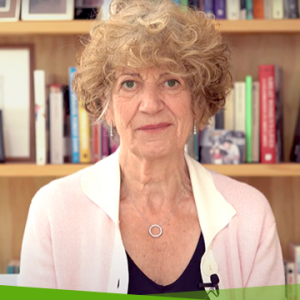
Nowadays, I would say almost every person I see in therapy talks about their troubled body en passant, as though it is not something to be dealt with because it is just something you have to live with.
About Susie Orbach"I am a psychoanalyst, psychotherapist and writer, and the co-founder of the Women’s Therapy Centre in London and New York.
I look at how the issues of society are structured into the individual, and constitute how we become who we are, but holding on to the notion that we live in a society and that every relation that exists is imbued with the power relations, the unconscious desires, the longings, and the struggle for subjectivity that exists between people."
Key Points
• As a psychotherapist, I have noticed an increase in what I would call body distress, or troubled bodies. Nowadays, almost every person I see in therapy talks about their troubled body as though they have accepted it’s something they have to live with.• I would say the vast majority are people who have body distress in the form of thinking they’re much too big. The second issue is age: the young ones want to be older and the women in their 40s all want to be younger-looking.• Girls are producing a kind of sexuality that has to do with performance rather than the expression of their own sexual desire. The huge prevalence of pornography means that both girls and boys end up confused about what an erotic is and what sex is.• When we come to the issue of trans, the idea of being able to get out of your body and into another body, and reconstruct a body, has a certain attraction because you have a desire to end up in a different place than the distressed body you're in.
Accepting our body distress?
As a psychotherapist, I have noticed an increase in what I would call body distress, or troubled bodies. When I started to practise, people with body difficulties would say, I have an eating problem – I throw up all the time, or I can’t eat, or I’m eating too much. They might have said they were too fat no matter what their size. They were very interested in working on that as a problem, as a manifestation of having a troubled body. Nowadays, I would say almost every person I see in therapy talks about their troubled body en passant, as though it is not something to be dealt with because it is just something you have to live with.
There is a deep acceptance now of being perhaps frightened of food, preoccupied with how you look, worried about whether you’re physically active or not, preoccupied with whether you should have cosmetic surgery, or involved in behaviours such as cutting oneself. At first these seem inexplicable to the individual, but they come to understand that these behaviours are a means to try to deal with their pain. People can be very reluctant to think that anything can be done in the therapy because they’ve been trying to solve the body problem for themselves for a very long time and they’ve either given up or they’ve sought commercial solutions.
research explained, academic insights, expert voices, university knowledge, public scholarship, critical thinking, world events explained, humanities decoded, social issues explored, science for citizens, open access education, informed debates, big ideas, how the world works, deep dives, scholarly storytelling, learn something new, global challenges, trusted knowledge, EXPeditions platform
Wednesday Jun 25, 2025
Wednesday Jun 25, 2025
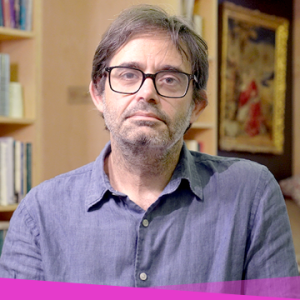
Anger is a primordial emotion and appears across cultures as a formative force.
About Josh Cohen"I’m a psychoanalyst in private practice in London and Professor of Modern Literary Theory at Goldsmiths, University of London.
My research is at the borders of psychoanalysis, literature and cultural theory. I’ve written a number of books, including one on Sigmund Freud, on privacy, on our aversion to work and, most recently, on the relationship between literature and life."
Key Points
• Anger is a primordial emotion and appears across cultures as a formative force.• Freud and Breuer believed that the traumas that trouble our mental lives are caused by psychic injuries, which often lead to a lodged anger at the centre of the self.• Addressing such anger requires a thoughtful, just response; it cannot be dealt with through quick fixes like shouting or receiving an apology. A primordial emotion
Anger is a main colour on the spectrum of human feeling. It’s one of the most primordial emotions. It involves the presence of at least one other person: a sense of injury that someone else has done us which makes us feel like we want to retaliate, to avenge ourselves. It’s one of the most venerable of human emotions, and one that is attested to across different cultures very early on.
We see anger in all the mythological traditions, in various cosmogonies and theogonies. The Greek gods, the Indian gods, various systems of the divine show us that in the creation of the world, in the creation of the people who make up the world, anger is always a formative force.
research explained, academic insights, expert voices, university knowledge, public scholarship, critical thinking, world events explained, humanities decoded, social issues explored, science for citizens, open access education, informed debates, big ideas, how the world works, deep dives, scholarly storytelling, learn something new, global challenges, trusted knowledge, EXPeditions platform
Wednesday Jun 25, 2025
Wednesday Jun 25, 2025
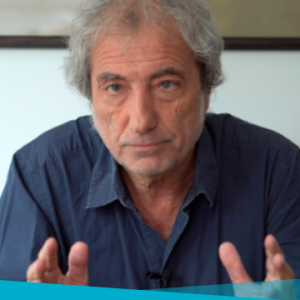
Helping and being helped informs almost all our forms of relating to other people.
About Adam Philips"I was trained as a child psychotherapist and I worked in the NHS for 17 years. I am currently a psychoanalyst and a writer. Since 2003 I have been the general editor of the new Penguin Modern Classics translations of Sigmund Freud.
I write one day a week and I tend to write about psychoanalytic topics. I don’t ever write about my patients, though, but mostly on topics like boredom, kissing, hatred, obstacles and a whole range of things that interest me on a personal level. These are essays in the literal sense, since they are experiments for pursuing certain kinds of ideas."
Key Points
• We’re always equally dependent throughout our lives, but in different ways.• Every time I ask somebody for something I’m acknowledging a lack of self-sufficiency, and that means having to face the fact that I need somebody who I can’t control.• Real help is based fundamentally on care for another person, a capacity to make realistic promises and an ability to bear somebody else’s suffering• One of the fundamental questions that helping and being helped raises is, what is power? And how is power going to be used? Describing a life in terms of dependence
When I worked as a child psychotherapist in the Department of Child Psychiatry at Charing Cross Hospital in London, we developed a new method for interviewing new patients. Normally, in a medical context, you take a medical history when you meet the patient for the first time. In addition to that, we asked people to tell us the story of their relationship to help. In a way, it seems like a simple thing. It’s clear that we’ve spent our whole lives being helped in different ways, and yet we often don’t think about our relationship to the wish to be helped, the need to be helped and our capacity to bear being helped.
One of the striking things is that in order to be helped, you have to acknowledge there’s something you can’t do for yourself and there’s something you need somebody else for. These are two powerful and fundamentally formative experiences, because one of the ways of describing a life right from the beginning is in terms of dependence – that a baby is absolutely dependent on their family. And so you can think of a life as one in which one grows from a state of absolute dependence to relative independence.
The story we’re told officially is that we begin by being absolutely dependent. Then we have a long period in which we become more and more independent and then, when we’re old, we become dependent again. I think it’s probably truer to say that we’re always equally dependent throughout our lives, but in different ways. What dependence means is being able to acknowledge that I need other people in order to grow and develop. I can only live my life in a state of need and want. And what that means is something to do with what we call as adults “being helped”.
research explained, academic insights, expert voices, university knowledge, public scholarship, critical thinking, world events explained, humanities decoded, social issues explored, science for citizens, open access education, informed debates, big ideas, how the world works, deep dives, scholarly storytelling, learn something new, global challenges, trusted knowledge, EXPeditions platform
Tuesday Jun 24, 2025
Tuesday Jun 24, 2025
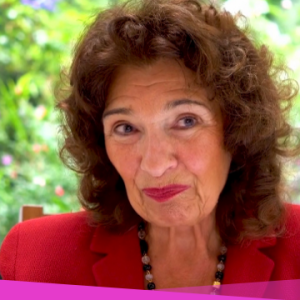
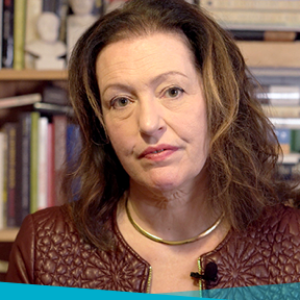
Lisa Appignanesi, Visiting Professor at King’s College London and Chair of the Royal Society of Literature, explores “good” and “bad” emotions.
About Lisa Appignanesi"I’m a Visiting Professor in Medical Humanities at King’s College London. I’ve written books on anger, on love and trials of passions, and on women.
I’m fascinated by the subject of emotions: extreme emotions, madness, Freud, the therapeutic and psychiatric professions."
Key Points
• Emotions in themselves can be both good and bad at the same time; it’s when they take over and there is an imbalance that things begin to go astray.• Women become the bearers of many of the emotional extremes. They are considered to be far more emotional than men.• Freud allowed women to have and experience desire. Women’s desire was no longer aberrant.• There has been a great medicalisation of our emotions and our potential behaviours. And we have nowhere to go except to doctors.
Classification of emotions
The classification of emotions has been with us for a very long time. The seven deadly sins are a form of classifying the emotions, of charting what is good and what is bad and what is desirable and not desirable. Emotions are aspects of feeling which lead you towards action, towards behaviour. And they also are linked to our motives. Emotions in themselves can be both good and bad at the same time; it’s when they take over and there is an imbalance that things begin to go astray. Every epoch, every moment in history, has its very own ways of behaving or characterising or acting crazy. So, what topples you over into something which is diagnosable by doctors? What topples you over is often that you don’t behave like everybody else or your emotions, the ones that are visible, don’t seem to be like those of others. Sanity itself, as a definition, of course, also changes because it’s very much linked to what society expects.
Tuesday Jun 24, 2025
Tuesday Jun 24, 2025
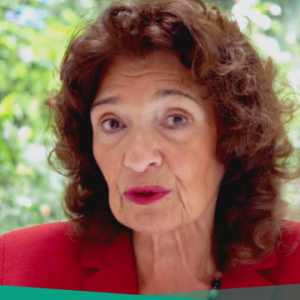
Edith Hall, Professor of Classics at Durham University, examines Aristotle’s approach to emotions and how we might understand them.
About Edith Hall"Professor of Classics at Durham University and Fellow of the British Academy.
I’m a classicist, originally focused on Ancient Greek theatre. I’ve spent most of my career blending data from ancient Greek literature with sociology, history, political theory and philosophy. I like to write about the ancient world in its holistic form, relating individuals and their ideas to important cultural, historical and political moments."
Key Points
• Aristotle considered emotions to be positive, contrary to other schools of thought that came before and after, and believed they would lead us to good.• For every emotion, passion or appetite, he said there was a “middle way”, or a correct amount of each, and that even emotions normally considered negative could be channelled for something beneficial.• Aristotle theorised that there are three types of friendships, and problems arise in relationships when we put people in the wrong category. Emotions are to be encouraged
The biggest change that Aristotle introduced into ancient ethics was quite a psychological one, which was that emotions are intrinsically to be encouraged and are good things. Now this really does mark him out against almost all the other ancient philosophical schools who all have similar goals of pursuing happiness, usually through virtue, ethics, trying to be a good person and linking those together. However, Plato thought emotion was an absolute demon and a beast, and we had to bind it down in our soul, transcend emotion entirely and replace it with pure reason.
Tuesday Jun 24, 2025
Tuesday Jun 24, 2025
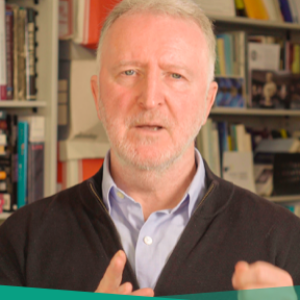
Lisa Appignanesi, Visiting Professor at King’s College London and Chair of the Royal Society of Literature, gives a brief history of extreme emotions.
About Lisa Appignanesi"I’m a Visiting Professor in Medical Humanities at King’s College London. I’ve written books on anger, on love and trials of passions, and on women.
I’m fascinated by the subject of emotions: extreme emotions, madness, Freud, the therapeutic and psychiatric professions."
Key Points
• The Western tradition of grappling with extreme emotions goes back to Ancient Greece – to Aristotle and to Homer’s The Iliad, in which Achilles enters a state of “melancholy” and grief at the death of his friend.• The Greeks, in their medical system, attributed extreme emotions to “humours” that manifested in the mind, body and soul.• In the Christian epoch, the understanding of emotions was connected to the seven deadly sins. The emotions that we now think of as negative, such as greed and lust, were thought of as “sins”.• Psychiatry emerged in the 19th century: French “mind doctor” Pinel was the forefather of the asylum, where people diagnosed with madness were, among other methods, “distracted” as a form of treatment.A very long Western tradition of thinkingThere’s a very long Western tradition of thinking about the emotions and trying to grapple with them, trying to understand them. It goes back as far as the written word – back to the Greeks, who thought of the emotions as something that you didn’t want to allow to get out of control and to take precedence over reason, rationality and deliberation. Aristotle tells us that. Yet, we see extreme emotions everywhere in Greek society and literature. We find it in Homer, with Achilles worrying and being in a state of melancholia, of grief. He’s mourning his dead friend and he’s also being possessed by the gods.
So, there are two alternative descriptions of what we could call extreme emotion. One is the emotion that drives you mad from without, and the other is the one that drives you mad from within. One is linked to grief and the other is linked to a kind of possession.
Friday Jun 20, 2025
Friday Jun 20, 2025
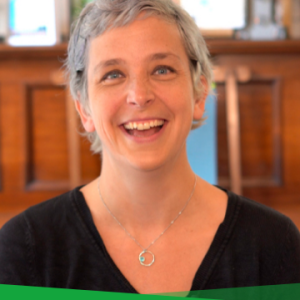
Barry Smith, Director of the Institute of Philosophy at the School of Advanced Study, explores the nature of explanation and human consciousness.
About Barry Smith
"I'm a professor of philosophy and Director of the Institute of Philosophy at the University of London School of Advanced Study.
I'm a philosopher of mind and language, and I'm interested in how these systems help put us in touch with the world around us and with ourselves, and I'm especially interested in the senses and our sense of taste and smell."
Key Points
• Wittgenstein thought that philosophical explanation is a matter of seeing things as they really are, instead of looking for underlying causes – and sometimes no explanation is needed.• For Wittgenstein, the question of how we know whether someone else has consciousness is ridiculous – all we have to do is look at their behaviour to see the expression of the mind.• Modern neuroscience has shown us that our sense of self is just that – a sense, which relies on the proper functioning of many different subsystems.
What would satisfy us?Imagine we have a complete science of the world that’s given us an account of the nature of reality, the nature of the mind and our engagement with the world. It seems to me that philosophers would still want to ask questions. There’s a gap that science doesn’t close. There’s something that the philosopher’s after when science is finished. And the question is, what would count as a philosophical explanation?
Wittgenstein was puzzled by and haunted by that question. We know what scientific explanations are. We know that hunger to really understand and put ourselves in the right place to get a grip on what’s going on in cell biology, or the brain, or even the chemical structure of the foods that we eat. But what is a philosophical explanation, and what would satisfy us?
Wittgenstein worries that sometimes philosophers are trying to do a sort of über-science. It’s as though we want not just the physics, but something beyond the metaphysics; we’re looking for the essence or the structure of reality, or language, or mental life. Wittgenstein begins to doubt that such a quest will deliver anything useful, but he thinks we still do seek explanation.
research explained, academic insights, expert voices, university knowledge, public scholarship, critical thinking, world events explained, humanities decoded, social issues explored, science for citizens, open access education, informed debates, big ideas, how the world works, deep dives, scholarly storytelling, learn something new, global challenges, trusted knowledge, EXPeditions platform
Friday Jun 20, 2025
Friday Jun 20, 2025
Tamsin Edwards, Reader in Climate Change at King’s College London, explains the risks of polarised thinking in climate change.
About Tamsin Edwards
"I’m a climate scientist and Reader in Climate Change at King’s College London.
My work involves quantifying the uncertainties in climate model predictions, and particularly the changes that we’ll see for the Greenland and Antarctic ice sheets’ contributions to sea level rise."
Key Points
• Science is always going to be uncertain at the cutting edge. You will always get studies and predictions that are different because we are at the tentative boundaries of knowledge.• There isn’t a single objective recipe for how to interpret data. There’s always a human involved. Scientists are searching for patterns. Avoiding polar or polarised thinking is crucial to understanding the complexities of issues such as climate change.• Two scientists proposed the idea that the edge of the ice sheet could crumble rapidly into the ocean. There isn’t really that much direct evidence for marine ice cliff instability. However, I’m not confident enough to completely rule it out.• Time is a key aspect of climate change research, affecting long- and short-term predictions and our understanding of reversible and irreversible change. Some aspects of climate change might be reversible and others not. The dangers of polar thinking
If there was one message I’d give to people, it’s the importance of not succumbing to black and white thinking, or – because I work in polar climate change – what you might call "polar thinking". We live in a world that is increasingly polarised. We have different groups that fight each other politically and culturally. That often spills into the way that we see science, scientific expertise and scientific predictions as being 100% right or wrong, or a particular future as being 100% good or bad. This simplistic way of thinking is very seductive.
It’s understandable that humans do this. It’s quicker than thinking about the nuances and the complexities. It’s something we do when we’re faced with uncertainty or fear. Our natural instinct is to simplify, to put up boundaries and to exclude the people we think don’t agree with us. We say that they’re “other”, that they’re wrong and perhaps evil or morally bad.
But we have to resist that human instinct to simplify and polarise. We have to take the time to look at the detail, to look at the nuance, to understand. It’s time-consuming. It’s hard. You put yourself at risk when you try to judge each event on a case-by-case basis: you might be wrong. And it’s so much easier to retreat into name-calling or certainty and dogma. But now, more than ever, we have to look at the subtleties of every situation. We have to be able to say: For the most part, I don’t agree with this person. But on this thing, they might be right. They’re not simply a "bad" person or a "wrong" person.
research explained, academic insights, expert voices, university knowledge, public scholarship, critical thinking, world events explained, humanities decoded, social issues explored, science for citizens, open access education, informed debates, big ideas, how the world works, deep dives, scholarly storytelling, learn something new, global challenges, trusted knowledge, EXPeditions platform
Friday Jun 20, 2025
Friday Jun 20, 2025
Mark Burgman, Director of the Centre for Environmental Policy, discusses the work dynamic between scientists and policymakers.
About Mark Burgman"I'm the Director of the Centre for Environmental Policy, and Chair in Risk Analysis and Environmental Policy at Imperial College London.
My work deals with the techniques for conservation biology and, more generally, with the tools for risk analysis that contribute to expert judgement, science and public policy."
Key Points
• A great deal of the problem is that us scientists don’t listen enough. We are too used to dispensing knowledge.• Policymakers work in a complex environment, and scientists need to adapt to them, not the other way around.• There’s been a growth in citizen science and their contributions of hard data.
I know that governments, internationally, aspire to evidence-based policymaking, and I also know that scientists, internationally, aspire to having their work used by governments to do good things and serve the public good. In my experience, public civil servants are motivated by a desire to improve net social benefit. It’s a wonderful motivation, and scientists by and large would love their work to have an impact, even those who are doing relatively theoretical work.
research explained, academic insights, expert voices, university knowledge, public scholarship, critical thinking, world events explained, humanities decoded, social issues explored, science for citizens, open access education, informed debates, big ideas, how the world works, deep dives, scholarly storytelling, learn something new, global challenges, trusted knowledge, EXPeditions platform

Friday Jun 20, 2025
Friday Jun 20, 2025
Keith Moffat, Emeritus Professor of Mathematical Physics at the University of Cambridge, talks about fluid mechanics.
About Keith Moffat
"I’m Emeritus Professor of Mathematical Physics at the University of Cambridge and a Fellow of Trinity College, Cambridge.
My research field is fluid mechanics in all its aspects, ranging from the micro scale, applicable to biological fluid mechanics in particular, to the macro scale interaction with magnetic fields, with relevance to planets, stars and galaxies."
Key Points
• Fluid mechanics has a very important part to play in biology. It’s something that we need to understand in our attempts to combat disease.• In the 1860s, Kelvin realised that if vortex lines in a fluid are knotted, they remain knotted for all time. In 2014, knotted vortices were realised for the first time in a laboratory.• Under the Navier–Stokes equations, these knotted structures can unknot. That leads to exciting work involving reconnection of vortex lines and associated jumps in vortex topology.
Fluid mechanics has a very important part to play in biology. There’s a whole area described as biological fluid mechanics and physiological fluid mechanics, which is concerned with airflow in the lungs or flow of blood through the veins and arteries. It’s therefore very fundamental, and something that we need to understand in our attempts to combat disease.
Going down to the smaller scale, to the level of the human cell, viscose forces become of dominant importance. Inertia becomes totally negligible. Surface tension effects can also be very important. Some fascinating problems arise in that area. It’s an area that has developed under the title “microhydrodynamics” or even “nanohydrodynamics”, if one goes to extremely small scales. There’s been a lot of excitement in that area over the last 20 years or so.
research explained, academic insights, expert voices, university knowledge, public scholarship, critical thinking, world events explained, humanities decoded, social issues explored, science for citizens, open access education, informed debates, big ideas, how the world works, deep dives, scholarly storytelling, learn something new, global challenges, trusted knowledge, EXPeditions platform