EXPeditions - The living library of knowlegde
The EXPeditions podcasts take you into the worlds of leading thinkers, scholars and scientists. Lively, accessible, reliable, these audio journeys guide you through key terrain in science and society, history, art and all the humanities.
Listen on:







Episodes
Wednesday May 28, 2025
Wednesday May 28, 2025
Anybody living in modern societies has encountered love, or at least knows people who have encountered love.
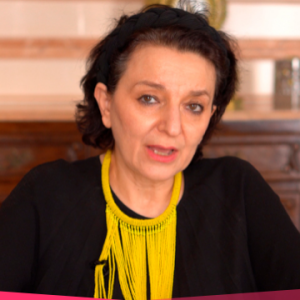
About Eva Illouz
"I’m a sociologist and I teach in Paris at the School for Advanced Studies in the Social Sciences.My work is about the sociology of emotions, the sociology of capitalism, the sociology of consumer culture and the interface between all of these. I’m the author of 13 books, and perhaps most recently The End of Love."
What is love?
Anybody living in modern societies has encountered love, or at least knows people who have encountered love. Of course, people encounter love. The question that a sociologist would ask is: what are the conditions in which people encounter love, and are there difficulties? What is the nature of these difficulties?Modern people are preoccupied with love and with the idea of love in a way that their predecessors were not. We have come to view love as a condition for a successful life. And we view love as an essential part of our autobiography. Traditional societies did not view love in this way. One of the reasons why love has acquired such crucial importance for modern people is that it articulates what is perhaps the main public philosophy of modernity: individualism.Individualism is and was the great vector for the making of modern law, as well as modern economy and the family. In the 16th century, for example, Shakespearean lovers make claims against their families, against their communities, in the name of love. Those claims are individualist claims, which cannot be implemented because society has not yet fully moved to an individualist society. But this helps us understand why love has played a fundamental role in the broad history of individualism. It has been the moral foundation for the individual’s revolt against communities and families. This is what some historians have called affective individualism.
Key Points
• Modern utilitarian individualism makes romantic love difficult to sustain.• The separation of sexuality from emotions makes it more difficult to experience love.• Women’s demands for equality challenge the previous stability of accepted gender roles.• There are tensions between modern family structures and the desire for excitement.
Wednesday May 28, 2025
Wednesday May 28, 2025
Edith Hall, Professor of Classics at Durham University, discusses Aristotle and why his ideas are still relevant.
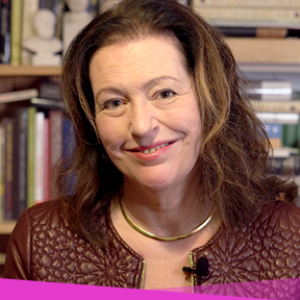
About Edith Hall
"Professor of Classics at Durham University and Fellow of the British Academy. I’m a classicist, originally focused on Ancient Greek theatre. I’ve spent most of my career blending data from ancient Greek literature with sociology, history, political theory and philosophy. I like to write about the ancient world in its holistic form, relating individuals and their ideas to important cultural, historical and political moments."
Aristotle and ethics
Aristotle was one of the two great founders of the entire Western philosophical tradition. He was taught by Plato – who was really the founder – absorbed everything Plato had told him and then developed it in numerous fascinating and subtle ways, also in ways that I think are much more relevant to the 21st century.
He was the greatest intellectual of all time because he was as equally interested in natural science as in what we call the humanities and philosophical subjects, but what interests me most is that he founded ethics. That is the fully developed philosophical inquiry into how we should behave and how our behaviour will affect our psychological state. Plato only thought about that from the point of view of the top down, so he invented an ideal republic. The actual well-being and behaviour of the citizens as individuals is very much secondary to the total organism. Aristotle took it the other way around and started with the human being, the individual, and worked outwards and upwards to how the whole community would look.
Key Points
• Aristotle founded ethics, a philosophical inquiry to guide people on how to live and interact with others, but with no divine element.
• He believed that humans are animals with the capacity to reason, plan and deliberate, which therefore gives us a moral imperative to protect the Earth and its inhabitants.
• Aristotle encouraged continually re-examining individually and commonly held beliefs in order to improve, and believed doing what we love would lead us to achieve our telos.
Wednesday May 28, 2025
Wednesday May 28, 2025
Barry Smith, Director of the Institute of Philosophy at the School of Advanced Study, talks about the philosophy of wine.
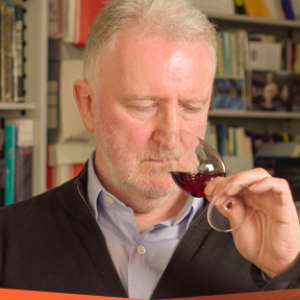
About Barry Smith
"I'm a professor of philosophy and Director of the Institute of Philosophy at the University of London School of Advanced Study. I'm a philosopher of mind and language, and I'm interested in how these systems help put us in touch with the world around us and with ourselves, and I'm especially interested in the senses and our sense of taste and smell."
The power of smell
When we understand that our knowledge of the world first comes to us through our senses, we tend to think of the senses of sight and hearing, perhaps touch, as the higher senses – the ones that are most important and relied on. Taste and smell tend to receive much less attention in philosophy. People tend to think of the sense of smell as relatively unimportant, and many people will imagine that the experience of smelling is just a mere modification of our consciousness, as philosopher Bill Lycan notes; they think it’s not telling us anything. Yet the sense of smell is very important to connect us to the world around us. Our sense of smell is there to tell us about smoke, or fire, or danger, or even the presence of food. A sense of smell is often used to give us a sense of somebody’s emotional state. We can smell fear, although that’s very unconsciously processed. The sense of smell is also used in tasting food. What we call “tasting” is not mainly coming from the tongue. The tongue just gives us salt, sweet, sour, bitter, perhaps savoury. But think of all the flavours we can taste: mango, melon, strawberry, pineapple. We don’t have pineapple receptors on our tongues. All of that is coming from smell.
Key Points
• Smell and taste are often considered less important, but these senses are key to connecting us to the world around us.
• Wine tasting opens up philosophical questions about subjectivity and objectivity. Is taste a matter of subjective experience? Or can we perceive the objective quality of a wine?
• Through prompts and guiding questions, we can use our senses to discover not just what we like, but why we like it.
Wednesday May 28, 2025
Wednesday May 28, 2025
Emanuele Coccia, Associate Professor of Historical Anthropology at EHESS, examines nature and beauty.
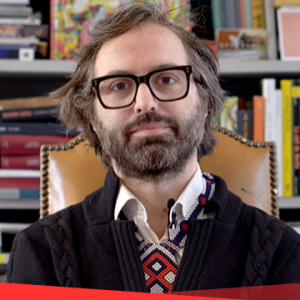
About Emanuele Coccia
"I am Professor at the École des Hautes Études en Sciences Sociales in Paris. I’m working on art, fashion and ecology. I published The Life of Plants four years ago, and this year I published a book called Metamorphoses."
How species modify other species
We normally think of nature as a pre-existing set of elements or space. This is because we fail to recognise that every living being has exactly the same agency that we have towards not-living space. Every living being modifies the environment, just as we do. Plants, for example, shape the world through their very existence and every living species modifies other living species – again, just as we do. In this sense, flowers are a very interesting part of the plant.
We often forget that flowers are mainly sexual organs. In a way, that makes our practice of giving flowers to our partner very strange because every time that we do so, we are essentially offering a bunch of penises and vaginas. But flowers are also strange and interesting because they are ephemeral sexual organs. They are sexual organs which are built and rebuilt every spring. Moreover, they are normally hermaphrodites, containing both masculine and feminine parts, but self-fertilisation is impossible.
Therefore, the task of flowers is to attract an individual from not just a different species but an entirely different kingdom to enter the sexual encounter of vegetal individuals and to decide who is mating with whom. In this way, flowers are putting their own biological and genetic destiny into the hands of a different organism, a third organism belonging to a totally different kingdom.
Key Points
• Every living being modifies the environment, and every living species modifies other living species.
• Many morphological variations cannot be explained by natural selection; aesthetic criteria also shape the evolution of species.
• If evolution is influenced by arbitrary choices of an aesthetic nature, then we can think of every species as biotic art.