EXPeditions - The living library of knowlegde
The EXPeditions podcasts take you into the worlds of leading thinkers, scholars and scientists. Lively, accessible, reliable, these audio journeys guide you through key terrain in science and society, history, art and all the humanities.
Listen on:







Episodes

Wednesday Jun 04, 2025
Wednesday Jun 04, 2025
Jonathan White, Deputy Head of the European Institute and Professor in Politics at the London School of Economics, examines civil disobedience.
About Jonathan White
"I am the Deputy Head of the European Institute and Professor of Politics at the European Institute of the London School of Economics and Political Science.
My research focuses on democratic theory, European politics and the politics of emergency. My most recent book, which came out in 2019, was very much on these topics and was called Politics of Last Resort: Governing by Emergency in the European Union, with Oxford University Press."
A critique of emergency politics
Emergency politics in general is a reactive form of politics. When one engages the formula of exceptional measures for exceptional times it’s often with a sense that one has no choice. The governing authorities of the day typically pronounce what they are doing as unavoidable, both in its substance – we have no choice but to take certain economic or geopolitical measures – and its timing – we can’t afford to wait and need to act now.
If we think of the 21st century as characterised by all politics lapsing into emergency politics, and if that becomes a pattern, then it would be surprising if one didn’t see the emergence of a critique that says this is just too acquiescent. Political authorities shouldn’t be taking decisions just because circumstances require it. They should be calling the shots. They should be deciding what priorities they want to follow. They should sometimes refuse to be influenced by the financial markets or by other forms of pressure; they should insist that they are the ones who choose what they want to do. In other words, the critique is that they should be engaging in a politics of what I call volition rather than a politics of necessity.
Key Points
• The story of 2020 can be seen as one of emergency politics and anti-emergency politics.• In many countries with populist leaders, there is a desire to frame choices as an extension of volition and to reject a politics of necessity.• The climate change crisis could give rise to an alternative emergency politics based in social movements.
Wednesday Jun 04, 2025
Wednesday Jun 04, 2025
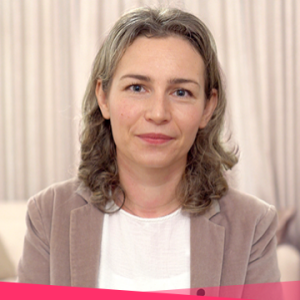
Lea Ypi, Professor of Political Theory at the London School of Economics, explores new social movements and the reformation of political parties.
About Lea Ypi
"I am Professor in Political Theory at the London School of Economics and Political Science.
I am interested in the history of political thought, justice, democratic theory, critiques of capitalism and the intellectual history of the Balkans. My latest book, Free, a coming of age story is set in the transition from socialism to liberalism."
A wrong way of looking at political parties
In thinking about the question of whether political parties should be reformed and why they have failed historically, it’s important to turn to the question of what makes a party morally desirable. So, we turn to the foundations of what characterised parties. Why do we want parties and why do we want partisanship? To return to that question is to try and recover an understanding of what parties or, more importantly, partisanship is about: what would a democratic life lose if we were to lose partisanship? Why have the political parties that we know failed to channel what is most interesting and morally significant about parties? There are two parts to that question. The first part is perhaps more historical and has to do with the way democracy and capitalism come together, and the uneasy alliance between democracy and partisanship. It is also important to think about the mission of political parties. When we think about what parties are for, what they do, we tend to think of them as agents that operate within a particular political institutional setting, which is territorially bound, and fights elections in that setting. We seek representation from politicians whose core purpose is to run, fight and win elections. I think that is a wrong way of looking at what a party is- what it does and how it contributes to democracy.
Key Points
• Political parties should do more to encourage citizens to make demands, which they can then channel into legislation and policy.• On the other hand, social movements should do more to seek political representation, which would make them more effective beyond a particular moment.• The failures of social inclusion have led to the rise of populism and the far right.
Wednesday Jun 04, 2025
Wednesday Jun 04, 2025
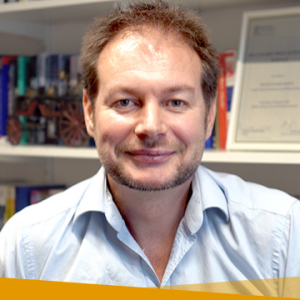
Jonathan White, Deputy Head of the European Institute and Professor in Politics at the London School of Economics, talks about emergency politics.
About Jonathan White
"I am the Deputy Head of the European Institute and Professor of Politics at the European Institute of the London School of Economics and Political Science.
My research focuses on democratic theory, European politics and the politics of emergency. My most recent book, which came out in 2019, was very much on these topics and was called Politics of Last Resort: Governing by Emergency in the European Union, with Oxford University Press."
Exceptional times, exceptional measures
Emergency politics can be understood as when actions departing from convention – whether that’s the law or simply conventional politics – are rationalised as urgent and necessary in order to fend off some type of threat. One might describe it as a simple formula that exceptional times demand exceptional measures, and those exceptional times could be any number of things: war, natural disaster or perhaps an economic crisis.
The other half of the formula is that exceptional measures are apparently required under those circumstances. Again, those might be any number of things, but often they would involve concentrating power in a certain leader or a small group of leaders, perhaps with the idea of speeding up decision-making. It might also be understood that under those conditions, leaders should be relatively unencumbered to act at their discretion; for example, they should be able to step outside the law or the normal procedures of politics. In one way or another, they claim they should be less constrained than they would be under normal circumstances.
Key Points
• Emergency rule can be understood as a supposedly temporary situation when exceptional times are said to demand exceptional measures.• In theory, it should be possible to return to the status quo ante after a period of emergency politics; in practice, it isn’t that clear.• If modern crises are profound and long-standing, perhaps we should be sceptical about emergency rule.
Wednesday Jun 04, 2025
Wednesday Jun 04, 2025
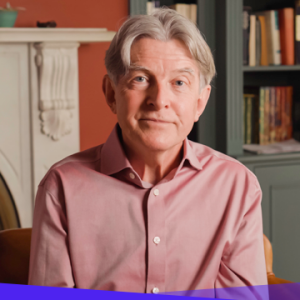
Conor Gearty, Professor of Human Rights Law at LSE, argues for a more nuanced approach to free speech.
About Conor Gearty
"I'm a professor of Human Rights Law at the London School of Economics, as well as a barrister at Matrix Chambers.
My books and articles are in the field of terrorism, but also civil liberties and human rights. These are my main academic interests."
A flawed concept
We have grown a deep commitment to free speech out of an idea that would seem absurd if we were to interrogate it now. This idea is as follows. We are autonomous, rational beings. We're independent. We are concerned about getting the right answers to particular intellectual challenges, and we see our society as resulting from a joust between independent actors exchanging rational arguments. To put it in Darwinian terms, the winner of this joust will be the most sensible and rational idea.
That’s our concept of free speech. It's based on something most people now see as false, namely that we stand outside the world, immune from its pressures. That seems to me to be incomprehensible. We are composed of passions, societal pressures, family allegiances and feelings. We're not just brains wandering around the place like computers, making dispassionate judgments. Secondly, we understand now that there isn't a truth above us that you can simply grab onto. Some religious people of traditional minds still think that’s the case, but most people disagree. Therefore, we have a truth that manages to establish itself in this chaos of argument and discussion. But it's a chaos that is not driven only by reason. It's a chaos driven by feelings, anger and desires to punish. We are much more emotional and complicated than was assumed. So free speech, which is fantastic for many reasons, is also dangerous.
Key Points
• Our affection for free speech derives from the idea that we are coolly rational beings, immune from societal pressures. In the modern world, this idea seems increasingly untenable.• The old metaphor of the “marketplace of ideas” is deeply flawed since it assumes that everyone attending the “market” speaks in good faith. In reality, many people lie to advance their agenda.• We should continue to regulate racist and fascist speech. Failure to do so puts the survival of our democratic system at risk.
Wednesday Jun 04, 2025
Wednesday Jun 04, 2025
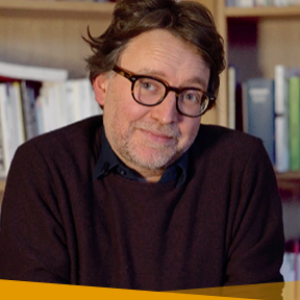
Antoine Vauchez, Research Professor at the Paris 1 Panthéon-Sorbonne University, discusses the future role citizens must play in their democracies.
About Antoine Vauchez
"I’m a research professor at the University of Paris 1 Panthéon-Sorbonne.
My work relates particularly to the intersection between markets, states and democracy, and I look at that through the angle of law and lawyers. I have recently published a book entitled The Neoliberal Republic: Corporate Lawyers, Statecraft, and the Making of Public-Private France."
Public versus private interests
The neoliberal State has undermined public goods by many means. The initial promise of neoliberalism was to clarify the distinction between the mission of the State and the mission of the market, but the paradox is that after 30 or 40 years of neoliberalism, what we have is a very blurred situation, with unprecedented hybridisation and confusion between public and private interests.
Key Points
• We should be able to maintain an autonomous public sphere, a public sphere where citizens have an equal influence on regulation.• Citizens should, through NGOs and public agencies, be the guardians of the border between the public and the private.• Citizens should be able to have an effect within the State. To achieve this, the State should not be geared exclusively towards the development of private markets.
Wednesday Jun 04, 2025
Wednesday Jun 04, 2025
Lea Ypi, Professor of Political Theory at the London School of Economics, discusses how the concept of citizenship has evolved.
About Lea Ypi
"I am Professor in Political Theory at the London School of Economics and Political Science.
I am interested in the history of political thought, justice, democratic theory, critiques of capitalism and the intellectual history of the Balkans. My latest book, Free, a coming of age story is set in the transition from socialism to liberalism."
A vehicle for enfranchisement
In thinking about how citizenship has historically been a vehicle of enfranchisement, it’s worth reflecting on the fact that the fate of citizenship has been bound up with the emergence and consolidation of the modern state. More specifically, it has been connected to the modern state as an institution that, in the history of political thought, has often been analysed as an entity that is distinguished from both the governors and the governed, and which is responsible for conferring rights upon subjects and putting them under particular obligations. What is distinctive about the modern state is that, unlike the previous institutions that have claimed political legitimacy in the past, like the monarchy or the Church, it is supposed to be an inclusive institution. It is also supposed to be a universal institution, one that is based upon the recognition of ideals of freedom and equality, and that grants membership on the basis of these premises which recognise that all subjects are equal: they all have the same rights, and they have the same obligations.
Key Points
• The fate of citizenship has been bound up with the emergence and consolidation of the modern state.• The idea of citizenship has, at least at the beginning of its democratic history, and the ideal of enfranchisement – of recognition of rights and obligations – has acted as a vehicle of inclusion.• It’s the current overlap between citizenship and nationality that has led to the tendency to turn citizenship from a vehicle of inclusion, as it was historically, at least in particular periods, to one of disenfranchisement and exclusion.• Famously, the republican constitution granted citizenship to anyone who pledged loyalty to the ideals that motivated the French Republic. It would be important to recover this understanding of citizenship as participation in the political process.• Migration is not a problem in its own right. The revised way of thinking about citizenship when it comes to borders, would be to no longer think of borders as a problem; to think of mobility as a fact of life and as something that people do.
Monday Jun 02, 2025
Monday Jun 02, 2025
Lyndsey Stonebridge, Professor of Humanities and Human Rights at the University of Birmingham, explores Hannah Arendt’s use of irony.
About Lyndsey Stonebridge
"I am Professor of Humanities and Human Rights at the University of Birmingham, in the UK.
I work on the intellectual history and literature of the 20th century, and I’ve written books on war, justice, war-time trials, statelessness, human rights and Hannah Arendt."
Arendt’s potent use of irony
There’s this extraordinary moment in an interview that Hannah Arendt gave in 1964 on German television with Günter Gaus. She says that when she read the transcripts of Eichmann’s interviews with the Israeli secret services, she just laughed out loud. ‘I laughed and laughed and laughed,’ she said.
It’s hard to think of a more singularly inappropriate way to respond to the memories of a mass killer, and to some extent, that was what got her into trouble with her reports on Eichmann in Jerusalem. She wrote in this kind of brutally ironic way, as if she didn’t care.
Irony, of course, can be defensive. People have said that Arendt just couldn’t come to terms with the horror of the Holocaust, so she used irony as a form of defence and a way of distancing herself from it. She’d lost so many friends and family, and her life had been devastated. Maybe there’s something in that, but I think that she used irony very seriously. She laughed seriously.
Key Points
• For Arendt, the ironic voice was terribly important as a means of countering the banality of evil. It’s a way of saying the unsayable.• Even after totalitarian States fall, totalitarian elements can remain in culture, enabled by thoughtlessness in institutions, capitalism and politics.• Thinking might be something you do by yourself, but judging can only be done within a political community.
Monday Jun 02, 2025
Monday Jun 02, 2025
Peter Pomerantsev, Senior Fellow at the London School of Economics, explores how democracy might face the information crisis.
About Peter Pomerantsev
"I’m a Visiting Senior Fellow at the Institute of Global Affairs of the London School of Economics and at the University of Johns Hopkins.
I research disinformation, hate speech and polarisation to try to work out what we can do about it."
The media “problem”
I always get confused when I look for a word that describes the scale of the issue that we’re talking about. I suppose you could just reduce this to a question about election rules or media; often, this is just talked about as a media problem. That’s not the right way to look at it. The internet is not a media space or even an information space. It’s just society. It’s everything. It’s where our schooling is and our relationships are. It’s not an information space issue that can be thought about purely in one government department. This is not just an issue for one ministry, like the often overlooked Department for Digital, Culture, Media & Sport in Britain. This is not just a culture, media and sport problem while the economy and healthcare and everything else ignores it. This is everything. This is how we organise ourselves. This is how we relate to ourselves as a society. So, the issues that have to be addressed are … everything.
Key Points
• The information, or misinformation, crisis cannot be dealt with from a media standpoint alone.• The information crisis has permeated all aspects of society. This threat to democracy has to be addressed in all of our institutions, systematically.• Individuals turn to smaller, tribal microcosms and close themselves off to deliberative conversation with others.• Fortunately, it is still possible to find commonalities between groups that seem diametrically opposed.
Monday Jun 02, 2025
Monday Jun 02, 2025
One of the chief assumptions of liberalism, at least a certain strand of liberalism and democratic theory, is the hope that the public sphere would be governed by reason: specifically, deliberative reason.
About Eva Illouz
"I’m a sociologist and I teach in Paris at the School for Advanced Studies in the Social Sciences.
My work is about the sociology of emotions, the sociology of capitalism, the sociology of consumer culture and the interface between all of these. I’m the author of 13 books, and perhaps most recently The End of Love."
Do emotions belong in politics?
One of the chief assumptions of liberalism, at least a certain strand of liberalism and democratic theory, is the hope that the public sphere would be governed by reason: specifically, deliberative reason. The fact that citizens can each express what they think would generate the process in which, through argument and disagreement, they would discover the truth together.
This assumption is very old in our philosophy. Plato did not have much respect for the leader or the educator who used emotions to reason. The use of emotions in the political sphere and the public sphere has always been deemed counter-democratic. Machiavelli, when advising the prince on how to control his subjects, put fear at the centre of his mode of governance. He suggested that the best way would be to invoke fear and love in his subjects.
But if you had to choose, you should choose fear over love because through fear, you can at least have social order. We have come to view this kind of advice as being antithetical with a democratic way of conducting our political affairs. That is a mistake. Emotions are never far from politics; in fact, they are always built within politics.
Key Points
• The use of emotions in politics is considered counter-democratic, but emotions are built into politics.• Minorities are increasingly giving voice to long-held grievances.• A rhetoric has emerged in which the majority feels oppressed by the minority.• Mutual grievances have led to the extreme polarisation of politics.
Monday Jun 02, 2025
Monday Jun 02, 2025
Samuel Moyn, Chancellor Kent Professor of Law and History at Yale University, looks at the triumph (or failure) of human rights.
About Samuel Moyn
"I am Chancellor Kent Professor of Law and History at Yale University.
I’m a historian of morality; at least, that’s how I think of myself. I’ve studied where ideas about morality come from and the philosophers who’ve propounded them. For the past decade or so, I’ve been interested in movements that try to make the world a better place: things like the human rights movement or the mobilisation to make war less cruel."
Selective rights
Human rights became triumphant around the end of the Cold War. As a new language of idealism and politics, they are selective. Like all things human, they prioritise certain things over others. Namely, the whole idea of human rights is that there are sacrosanct entitlements: free speech, integrity of the body, maybe some notion of sufficient provision, like enough housing or health, that every human deserves. However, what we’ve seen is that certain other priorities can get lost when human rights achieve the prominence they have in our world.
Key Points
• Human rights become sacrosanct entitlements but do not alleviate inequality.• International human rights movements and law create stigma in the international system.• We should reclaim human rights as part of local politics and in relation to a larger agenda.