EXPeditions - The living library of knowlegde
The EXPeditions podcasts take you into the worlds of leading thinkers, scholars and scientists. Lively, accessible, reliable, these audio journeys guide you through key terrain in science and society, history, art and all the humanities.
Listen on:







Episodes
Friday Jun 06, 2025
Friday Jun 06, 2025
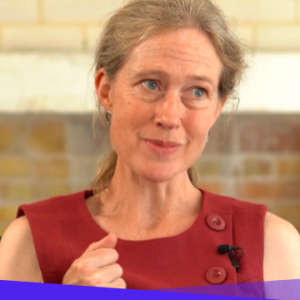
Lucy Delap, historian at the University of Cambridge and fellow of Murray Edwards College, talks to us about the usability of the feminist past.
About Lucy Delap
"I’m a Reader in Modern British and Gender History at the University of Cambridge and the Deputy Chair of the History Faculty.
I’ve written books on the transatlantic and global history of feminisms, as well as on women’s domestic labour."
Learning from the feminist past
Today’s activists have sometimes been ambivalent about the feminist past, so I’d like to ask: what is usable about feminist histories? How can we draw on the experiences of the past? How can we develop a rich relationship to the past that can help us infuse our contemporary problems and our contemporary activism? When activists look back to feminists of the past, they sometimes see a movement that, in their eyes, was too timid or too class-dominated by wealthy and educated women, too racist or too oriented around the concerns of the global north to have much significance to their struggles today.
There has been a repudiation of feminism of the past, but I want to suggest that there are important ways in which we should be looking back. One way is to see shared tactics over time. In my research, I’ve been fascinated by the returning to particular ways of fighting male violence and of resisting sexism and patriarchy.
Key Points
• There has been a repudiation of feminism of the past, but by looking back on shared tactics we can develop a rich relationship to the past that can help infuse our contemporary problems.• Similar tactics have emerged amongst women activists at different historic periods and places. For example, Women stripping to show their lack of respect and their freedom has been an important tactic over time, though it varies in impact and symbolic meaning.• The fact that there are feminists with a mixed legacy doesn’t mean we should wipe them out of the feminist canon.

Friday Jun 06, 2025
Friday Jun 06, 2025
The history of global feminisms is deeply entrenched in the history of colonialism and the history of the rise and fall of slavery in the 19th century.
About Durba Mitra
"I’m the Richard B. Wolf Associate Professor of Women, Gender and Sexuality at Harvard University.
I am a scholar of the history of sexuality and epistemology in South Asia and the comparative colonial and post-colonial world."
Origins of global feminism
The history of global feminisms is deeply entrenched in the history of colonialism and the history of the rise and fall of slavery in the 19th century. In the first place, the origins of women’s movements begin in the 19th century – although women fighting for citizenship rights, the right to vote, and the right to have a voice in political and social life, happens long before then. But it’s in the 19th century that we see the emergence of long-term, wide-scale political movements where women make a claim to the right to vote and the right to citizenship in a broader sense. These rights and ideas cannot be disassociated from the end of slavery and the rise of colonialism in many parts of the world.
Why should we think about the origins of global feminisms with these complicated histories? The abolition of slavery gives us the first and most comprehensive language about humanism, equity in humanistic imaginations, and how we can imagine each other as humans. In particular, it gives us a language about how we can think about those people who have been treated as less than human, especially women, as part of and critical to political and social movements.
Key Points
• The history of global feminisms is linked to the histories of slavery and colonialism.• The systematic exclusion of women of colour shows that the category of “woman” is never just about women.• The emergence of feminist coalitional politics in the 1970s continues to be influential today.

Friday Jun 06, 2025
Friday Jun 06, 2025
Maxine Molyneux, Professor of Sociology at University College London, explains feminist activism from a historical perspective.
About Maxine Molyneux
"I am Professor of Sociology at the Institute of the Americas, University College London, I am deeply committed to human rights.
I’ve written books on Latin American feminism, women’s movements, state socialism and poverty and social justice."
First wave feminism
The first thing to say is that feminism emerged in the period of the Enlightenment as a movement – a radical movement – for equality, rights and justice. In the 18th century, there were significant debates about rights: the American Revolution, the French Revolution and the Declaration of the Rights of Man, for example, as well as debates about the emancipation of slaves and the emancipation of women.
The 18th century was the beginning of the discussion about women’s place in society. Women were beginning to demand their own rights and, indeed, when the Declaration of the Rights of Man was issued during the French Revolution political activist Olympe de Gouges produced the Declaration of the Rights of Woman – for her pains, alas, because she was a monarchist, she ended up on the guillotine. Nevertheless, the issue of women’s rights was taken up and continued to be a major concern throughout the 19th century, when the very first feminist movements were beginning to put together sets of demands for women to be recognised as full human beings with full rights. The period of the 19th century was, therefore, the inception of feminism and the birth of those first women’s movements making demands for suffrage, for the right to have an education and the right to enter the professions.
The 20th century saw the continuation of that first movement known as the first wave of feminism. There was the very first attempt to create international feminist organisations pushing for rights, equality, citizenship and justice, ideas that travelled to most parts of the world: women in Japan calling themselves The Blue Stockings, demanding the right to education, and Latin American women demanding suffrage. In the more radical sectors of feminism, like the anarchist movement, women were demanding sexual justice; that is, not to be treated as victims of the double standard, not to be controlled by men, not to have their sexuality undermined and denigrated. The gains of that first wave were slow at first but gradually spread through society and through to other parts of the world.
Key Points
• Feminism has generally been seen to have pursued three prongs of struggle: social justice, rights and political representation.• First wave feminism: In the early 20th century, there was the very first attempt to create international feminist organisations.• Second wave: The 1970s saw a new wave of feminism which was far more radical: feminists began to question the whole cultural set-up in their societies and to demand cultural change, as well as structural change.• Third wave: This is known as a period of institutionalisation, where there was more activity to bring about legal change and to advance a programme of women’s rights in the fullest form.• Fourth wave: There was a new vitality brought into feminism in the 2010s by a generation of young women activists.
Friday Jun 06, 2025
Friday Jun 06, 2025
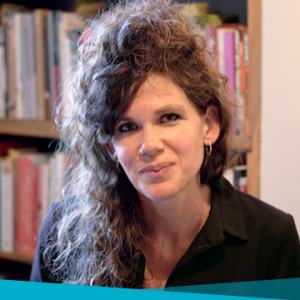
One thing that I found while researching the history of feminism was that the history of feminism was again and again a history of having to point out things that should be obvious.
About Hannah Dawson
"I teach the History of Ideas at King's College London.
I work on early modern philosophy, especially moral and political thought, and also the history of feminism."
A history of pointing out the obvious
One thing that I found while researching the history of feminism was that the history of feminism was again and again a history of having to point out things that should be obvious. It’s a history of trying to make visible certain things that are completely obvious and apparent to some, and yet apparently invisible to others. That is true both of women pointing out their own situation to men, but also of some women having to point that out to other women.
To begin with the most obvious and fundamental way in which the history of feminism is the history of blind spots, we might think about the famous suffragette Emmeline Pankhurst. She thought that her fundamental task was simply to show men that she and her sex were human beings. If they saw her humanity, it would be obvious that she ought to be allowed the vote. It’s that baffling, bewildering incapacity to see that struck me again and again.
Key Points
• The history of feminism is the history of women pointing out obvious truths to men, but also feminists pointing out obvious truths to each other.• Feminists have used Marxism to show that women’s work should be considered labour and remunerated as such.• In many ways, middle-class white feminism not only failed to include women of colour, working-class women and gay women, but also exploited these women.

Friday Jun 06, 2025
Friday Jun 06, 2025
All women, with or without privilege, are in some way or other disadvantaged. They are always the Other, no one and oppressed.
About Juliet Mitchell
"I’m a professor emerita of psychoanalysis and gender studies at the University of Cambridge, where I established a Centre for Gender Studies. I'm also Founder Director of the Expanded Doctoral School in Psychoanalytic Studies at the Psychoanalysis Unit of University College London.
I’m not a specialist. I’m what people call a polymath, which means I go across a lot of disciplines. The sorts of subjects I range in are sociology, politics, socialist politics and art. I’m currently working in the field of contemporary art, Louise Bourgeois particularly, and in English literature, which was my first degree."
An unequal life
I started to look at feminism in a systematic way when I first read Simone de Beauvoir. I realised from being a student at Oxford the extraordinary gender disparity that there was between the 1 in 12 students who were women, and the 11 men who were men. All of them back then were dominated by the public-school ethos and hadn’t really seen a woman since they went to boarding school at the age of eight. I wanted to understand a bit about this. Simone de Beauvoir’s book The Second Sex was very much on the agenda of an interest that we all had in French literature.
And so I read Simone de Beauvoir and was horrified. I thought, my God, is it as bad as that here? Is it really as awful as she’s making it out to be? I started work in the late 1950s to look at the situation of women in Britain and I’m afraid I found that it was as bad! It wasn’t only bad in the obvious way of very poor pay. Everyone said it was half pay, but I think, if anything, it was often under half pay because women did much lower jobs and there were huge discriminations. In fact, what had happened was a discrimination that set up a division between women in the family and women in work.
Key Points
• All women, with or without privilege, are in some way or other disadvantaged. They are always the Other, no one and oppressed.• A study of the family structure and women’s role in it, provided the basis for understanding that everything personal is also political.• There are many feminisms around the world but they all have one goal: to struggle against the inequities and the oppression of women.
Wednesday Jun 04, 2025
Wednesday Jun 04, 2025
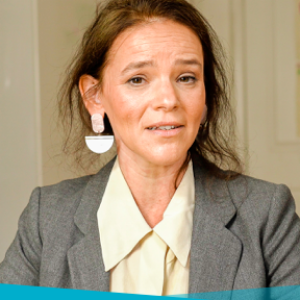
Even though joking is often wielded by the powerful against the weak, it’s just as often the recourse of the weak against the strong.
About Devorah Baum
"I'm an Associate Professor in English Literature and Critical Theory at the University of Southampton.
I research literature, philosophy, psychoanalysis and religion, and I've laid a particular emphasis in recent years on feelings and their role in our lives, and on jokes. And I'm currently writing a book on marriage."
When entertainers become politicians
It was Karl Marx who claimed history repeats first as tragedy and then as farce. He was thinking about political actors who profess one thing but then act in the opposite way. When they or their words appear so debased as to be pretty much meaningless, then history tilts towards the farcical. And that sense is only heightened during those periods when authoritarian leaders assume power by appearing in the guise of light entertainers.
Light entertainers have had astonishing success converting into politicians. We’ve seen this happen not only with the former reality star Donald Trump in the US, but in Italy, where a comedian started the Five Star Movement, and in Ukraine, where a former stand-up became president. The same thing happened in Slovenia, too. And in the UK, Boris Johnson’s compulsive clowning likely not only made him prime minister but gave him extraordinary licence to be buffoonish about it.
Key Points
• From the US to Italy and Ukraine, light entertainers have had astonishing success converting into politicians. Trump succeeded by connecting his own resentment of being laughed at with crowds who’ve spent a lifetime smarting from similar wounds.• Even though joking is often wielded by the powerful against the weak, it’s just as often the recourse of the weak against the strong.• Today, there is often confusion around whether people are joking or not. Some have taken advantage of this to advance political agendas.

Wednesday Jun 04, 2025
Wednesday Jun 04, 2025
Freedom of speech is about freedom of expression. I want to be able to express myself, in dance, or in painting or in speech, because I should be able to tell you what I think.
About Michael Roth
"I'm the President and a professor at Wesleyan University in Middletown, Connecticut.
My work is on how people make sense of the past. I have spent many years thinking about the philosophy of history through films, political theory, psychology and psychoanalysis. Most recently, I've written a couple of books around education, how it changes one's history and how it uses the past to create a different kind of future."
Debates on the lack of debate
All over the United States, there are extraordinary debates about whether you can have a debate. People say there’s no debate going on, and they’re debating that. Some people who think of themselves as left-wing liberals or moderates feel like they’ve been outflanked by students they call “woke”, which means students who are very concerned about racism and racist oppression. Some people on the right think that universities have become centres of indoctrination and nobody can disagree. Recently, I did an interview with an education publication that asked: ‘Isn’t it true that academic freedom has declined precipitously in recent years because people are self-censoring – people are afraid to speak their minds?’
Key Points
• Having others disagree with us is fundamental to learning when we are wrong.• Instead of focusing on our own freedom to disagree, we should want others to have the freedom to disagree with us.• Freedom of expression is important, but authority figures have a responsibility to stop people from using expression as a tool of intimidation or harassment.

Wednesday Jun 04, 2025
Wednesday Jun 04, 2025
The United Nations launched the Convention on the Rights of the Child (CRC) became the most universally ratified treaty in history.
About Roger Hart
"I'm a professor in psychology at CUNY, trained in geography and most affiliated with the interdisciplinary field of childhood studies.
Much of my research has been on children's use and experience of the environment to try to improve planning and design for them, as well as to find methods for giving them a voice. I have helped International agencies, like the UN and Save the Children, with different projects all over the world that think about child participation."
The right to a voice
Human rights are essential for all humans. After women, children might be thought of as the last phase of Enlightenment thinking in terms of getting their rights recognised. It takes time for rights identified in any treaty to take hold in any society.
The United Nations launched the Convention on the Rights of the Child (CRC) in 1989 after a ten-year drafting process. Countries all over the world rapidly ratified it and it became the most universally ratified treaty in history. Ironically, I’m saying this from New York, in the only country that has not ratified the UN Convention on the Rights of the Child.
The CRC contains articles on provision and protection, as you would expect. Additionally, it includes articles on participation, on the rights of children to be actively participating in society, to have a voice, to have information and to be able to gather collectively. The treaty had a powerful effect. When the United Nations Committee on the Rights of the Child began to meet, the secretary was shocked to see how much children themselves had become the powerful agents of change. Having a voice turned out to be an excellent motor for the achievement of children’s rights. Children started to change the way some cultures viewed childhood, how adults saw children, as well as how children saw themselves as citizens with rights. It was a radical change.
Key Points
• The United Nations launched the Convention on the Rights of the Child (CRC) in 1989 after a ten-year drafting process. It became the most universally ratified treaty in history.• It includes articles on provision and protection, as well as children’s rights to actively participate in society actively.• It is dramatically helping protect children from harm, early marriage and all forms of domestic abuse.• There are still children doing dangerous work.

Wednesday Jun 04, 2025
Wednesday Jun 04, 2025
David Runciman, Professor of Politics at the University of Cambridge, examines the role and representation of young people in democracy.
About David Runciman
"I’m a Professor of Politics at Cambridge University and Fellow of the Royal Society of Literature. I explore the history of politics and political ideas, and democracy.
My interest is in the history of politics and political ideas and particularly, democracy. Where does it comes from? How different is our democracy from democracy in the past? What might it become in the future? In parallel to my research, writing and teaching work, I hosted a weekly podcast called Talking Politics with 300 episodes between 2016 and 2022."
A widening generation divide
When we look at the question of young people in democracy and the generation divide, we see two things going on. One is that the generation divide is widening. It used to be the case that the big division in democratic politics was on the basis of class or income. To know how people voted and what political attitudes they were likely to have, the first question you’d want to ask was what class that person comes from. Or how much money that person earns. Now, you discover much more by finding out someone’s age. People under the age of 35 tend to have political views, voting patterns, preferences on big questions that are very different from people over the age of 50 and, particularly, people over the age of 65. We see that gap widening.
Take the example of the UK. Young people were overwhelmingly against Brexit, while older people were overwhelmingly in favour of it. At the last UK general election, young people voted overwhelmingly for Jeremy Corbyn and the Labour Party. If only people under the age of 30 had been allowed to vote, Corbyn would be prime minister, with the biggest majority in British political history. People over the age of 65 voted overwhelmingly for Boris Johnson and the Conservatives. And those two votes show the other thing that’s going on, which is a demographic shift.
Key Points
• The generation divide in modern politics is constantly widening.• The old and young have opposing opinions on many important political questions, but the democratic system is skewed towards the old.• Giving children the vote is neither a radical nor dangerous idea.

Wednesday Jun 04, 2025
Wednesday Jun 04, 2025
Alex Teytelboym, Associate Professor of Economics at the University of Oxford, examines the economic reality experienced by refugees.
About Alex Teytelboym
"I am an Associate Professor of Economics at the University of Oxford, where I specialise in market design and network economics.
My research interests include how best to run complex auctions and how networks shape the diffusion of innovations. I am also interested in applying economic theory to environmental economics and energy markets. I co-founded Refugees.AI, an international collaboration to develop analytical tools to improve refugee resettlement."
The Syrian refugee crisis
When the Syrian refugee crisis really spilled over into Europe, it became apparent that some EU institutions created to deal with refugees were utterly broken. One of the main institutions was called the Dublin Convention, which created rules about applying for asylum upon arriving in an EU country. The rules are quite complex, giving priority to those with family members in a particular country.
However, the refugees who were coming from Syria in 2015, by and large, didn’t have family members in the EU. According to the Dublin Convention, the first country to which they arrived was supposed to process their asylum application.
This was a strange rule since most refugees arrived in Greece and Italy, and those countries were not necessarily where they intended to go. Although refugees were fleeing their home countries in fear for their lives, it seemed strange to limit where they could go once they were safe. Overall, the situation struck me as a horrific injustice and a wasted opportunity to think carefully about helping these people.
Key Points
• The Syrian refugee crisis made it clear that European institutions are ill-equipped to deal with a sudden influx of refugees.• Current asylum rules limit a refugee’s ability to select their residence, thereby undermining their agency to choose a situation that best reflects their needs.• Despite common misconceptions, refugees live rich economic lives. Individuals in refugee camps, for example, often engage in entrepreneurial and business activities.